
Resolving Complex Overcrowding Without Extractions
A deep dive into a severe orthodontic case where Invisalign clear aligners successfully created space and alignment while preserving all natural teeth.
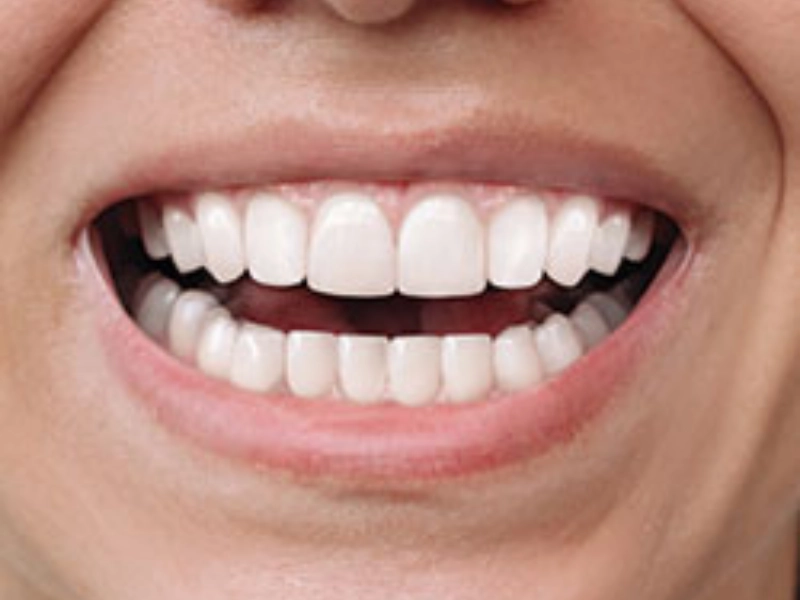
Clinical Documentation: Resolving Complex Overcrowding Without Extractions
The Patient's Concern
Many patients in Bilaspur avoid orthodontic treatment because they fear the "standard" recommendation: pulling out healthy teeth to create space. In this case, a 24-year-old patient presented with severe upper and lower crowding. The teeth were significantly overlapped, making it difficult to maintain hygiene and affecting the patient's smile confidence.
The primary requirement was clear: Achieve a straight smile while preserving all natural teeth.
The "Non-Extraction" Strategy
In traditional dentistry, severe crowding is often solved by removing the first premolars. However, at 32 Intact, we leverage digital technology to explore more conservative routes.
Our analysis showed that by utilizing Sequential Distalization (moving teeth backward one by one) and Arch Expansion, we could create the necessary 6-8mm of space required for alignment without losing a single natural tooth.
"Preserving natural tooth architecture is our priority. By using 3D simulations, we can calculate exactly how much space can be gained through widening the arch before we even start the treatment." — Dr Sudhanshu Tripathi
Clinical Workflow: How Space was Created
1. Digital Space Analysis: We used a high-resolution 3D scan to measure the exact degree of crowding down to the tenth of a millimeter.
2. IPR (Interproximal Reduction): To gain a few extra millimeters safely, we performed microscopic polishing between specific teeth. This is a painless process that creates just enough room for the teeth to slide past each other.
3. SmartForce Attachments: Small, tooth-colored 'bumps' were placed on specific teeth to give the Invisalign aligners the leverage needed to rotate severely crowded teeth into their correct positions.
The Transformation Timeline
The treatment took 14 months to complete. Unlike traditional braces, which can be difficult to clean during crowding cases, the patient was able to remove their aligners to brush and floss normally. This prevented the decalcification and "white spots" often seen in complex orthodontic cases.
The final result was a wide, healthy smile with all 32 teeth perfectly aligned and a functional, comfortable bite.